
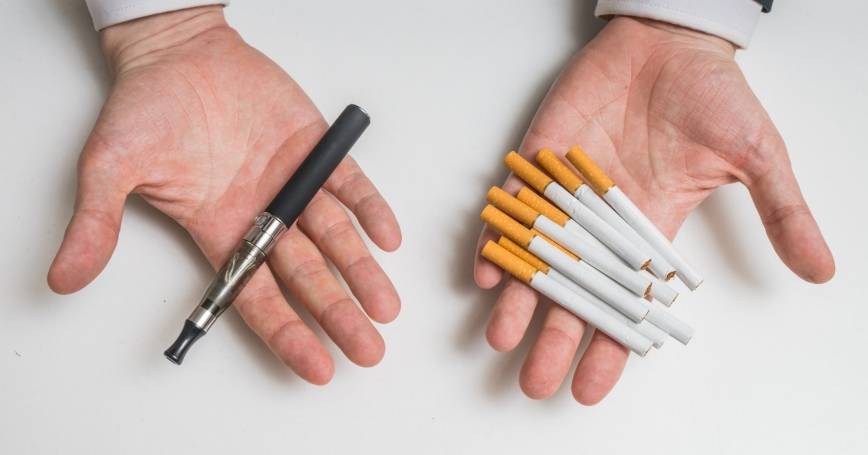
n recent years, electronic cigarettes have surged in popularity—so much so that many people now encounter more e-cigarettes than traditional ones. According to the Centers for Disease Control and Prevention (CDC), an estimated 3.2 percent of Americans—more than two million of them teenagers—regularly use e-cigarettes. In response, the Food and Drug Administration (FDA) has labeled youth vaping an epidemic, issuing over 1,000 warning letters to retailers caught selling e-cigarettes to minors.
With concerns mounting, many are asking the same question: How harmful is vaping, really?
What Is Vaping?
Electronic cigarettes are battery-powered devices that heat a liquid—typically containing nicotine—to produce an inhalable vapor, explains Tanya Elliott, M.D., an allergist and internist. This inhalation process is what we commonly refer to as vaping, and it’s sometimes called “Juuling,” a nod to the popular brand Juul.
While some devices resemble traditional cigarettes, others look like flash drives or pens. Importantly, vaping differs from smoking: e-cigarettes do not burn tobacco. As a result, users are not exposed to tar, carbon monoxide, or many of the well-known toxic byproducts of combustion.
Is Vaping Healthier Than Smoking?
Not necessarily. According to Elliott, many e-cigarette liquids contain potentially harmful substances such as propylene glycol or glycerol. When heated to high temperatures, these compounds can convert into propylene oxide—a chemical believed to be carcinogenic.
Research is still emerging, but early findings raise red flags. A 2018 American Journal of Preventive Medicine study analyzing data from nearly 70,000 participants found that daily e-cigarette users may have double the risk of heart attack compared to non-users. Long-term effects remain uncertain simply because e-cigarettes have not been on the market long enough for decades-long health studies.
Nicotine Remains a Major Concern
“Most vapers still use nicotine—and companies like Juul don’t offer nicotine-free options,” says Ana María Rule, Ph.D., of the Johns Hopkins Bloomberg School of Public Health.
Nicotine is highly addictive and linked to numerous health risks. The Surgeon General’s 2014 report The Health Consequences of Smoking—50 Years of Progress highlights nicotine’s associations with reproductive harm, cardiovascular problems, and impaired immune function. Given the relative novelty of vaping, the full extent of nicotine-related risks in e-cigarettes may take years to fully understand, Rule notes.
Does Vaping Help People Quit Smoking?
Some individuals report that e-cigarettes help them reduce or stop smoking traditional cigarettes. However, the evidence is inconsistent. “It works for some, but many become ‘dual users,’ meaning they both smoke and vape,” Rule explains. This dual use may negate potential harm reduction benefits.
Current Regulations
Federal law prohibits the sale of nicotine-containing devices, including e-cigarettes, to anyone under 18. Despite this, minors often find ways to obtain them—particularly online, where age verification methods can be easy to bypass.
In 2016, the FDA extended its regulatory authority to cover all tobacco products, including e-cigarettes. As of 2018, all such products must carry a warning label about the addictive nature of nicotine.
The Bottom Line
E-cigarettes may expose users to fewer harmful chemicals than traditional cigarettes, but that does not make them safe. They contain addictive nicotine, may release toxic substances, and have health effects that remain largely unknown due to their relatively recent introduction. In short, while vaping might be less harmful than smoking, it is still far from harmless.
What do you think about this article? Please share it and comment.
You would like to publish an article with us? Please contact us.
 General Health Magazine