
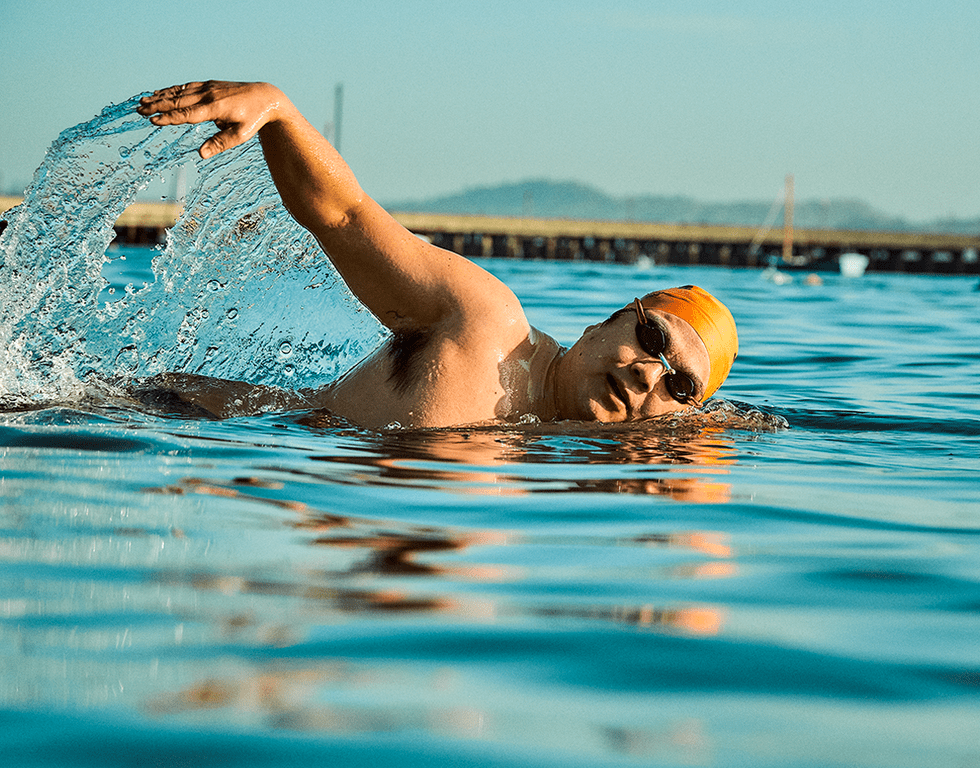
Ryan Utsumi, 41, grew up immersed in the serene, turquoise waters of Southern California. He started swimming competitively at just five years old, and by the time he was in his twenties, he’d spent over 15 years steeped in the world of lap lanes, chlorine, and coaches. “By 2001, I’d had enough,” he recalls. “I was burned out.”
At least, that’s what he thought.
A decade later, a move to San Francisco would quietly reignite his relationship with the water. This time, it wasn’t the regimented world of competitive swimming calling him back—it was the open water of the Bay. “I started swimming again just to get moving,” Utsumi says. Gone were the structured workouts and ticking clocks. “I was free to swim however and wherever I wanted. That’s what made it fun again.”
In the open water, he discovered a whole new side of swimming—one with unpredictable currents, bracing cold, and a mental challenge that no pool could match. “No two days are the same, even on the same route,” he says. “I loved the constant thinking: How long can I stay in this water? What’s the current doing today? Are there seals around? Can I get from point A to point B?”
That curiosity and passion quickly escalated. His swims went from two hours to six, then eight. By 2016, he had tackled one of the sport’s most iconic feats—the English Channel, which he completed in 11 hours. The following year, he checked off the remaining two swims of the “Triple Crown” of open-water swimming: Manhattan Island (7:17) and the Catalina Channel (11:06). He’s now four swims deep into the Oceans Seven challenge—the aquatic equivalent of climbing the Seven Summits—and has his sights set on the Cook Strait in New Zealand, planned for 2022.
What’s the Allure of Open Water?
In the UK, it’s called “wild swimming,” and the appeal goes well beyond just being outdoors. Open water demands more than technique—it requires adaptability, grit, and the ability to roll with whatever nature throws at you. “You have to plan,” says Utsumi, “but also be ready for the plan to fall apart. That’s part of the excitement. You’re not in control.”
For Utsumi, rough water is where the fun begins. But you don’t need big waves or cold seas to start. Lakes, rivers, and calm bays offer the perfect entry point into open water. Here’s how to dip your toe in.
Utsumi’s Top Tips for Open-Water Beginners
1. Start Shallow
Before diving in, check that your chosen body of water is safe for swimming. Local authorities or open-water swim clubs (try Meetup.com) can help. “Your first open-water swim is going to be an adventure,” Utsumi warns. “The temperature’s different. The visibility’s different. You might feel anxious, which makes you tire faster.”
To ease in:
- Wear a silicone swim cap to retain heat
- Use goggles with a wide field of vision (like the Roka R1)
- Stick to the shallows and swim parallel to shore
- Sight often—look up to avoid veering off course
2. Don’t Hold Your Breath
Breathlessness often comes not from lack of oxygen, but from not exhaling. “A lot of people sip air in with every stroke but never let it out,” Utsumi says. That creates tension and fatigue. The fix? Exhale fully when your face is in the water. “It’s like magic,” he says. If you get overwhelmed, tread water and reset.
3. Sync with the Water
“I try to match my stroke to the chop,” Utsumi explains. That might mean quick strokes in choppy water or a longer stroke in rolling swells. “Swimming in rough water is like running during an earthquake—you don’t always know where your footing is.” Expect missed strokes and the occasional gulp of water. Adapt your stroke, breathing, and mindset. Open-water swimmers embrace unpredictability—it’s part of the training, for swimming and for life.
4. Let Go of the Shark Fear
Utsumi’s swum with dolphins and even been bumped by seals, but he says it’s usually the things you don’t see that are easier to deal with. “I actually prefer murky water. In clear water, like Hawaii, you can see everything—and that can be unnerving.” His advice: Trust that you’re not on the menu. Most marine life isn’t interested in you, and they’ll leave you alone.
Whether you’re chasing the Oceans Seven or just looking for a new kind of adventure, open water offers a deep sense of freedom that’s hard to find anywhere else. “It’s wild, it’s unpredictable,” Utsumi says, “and that’s exactly what I love about it.”
What do you think about this article? Please share it and comment.
You would like to publish an article with us? Please contact us.
 General Health Magazine