
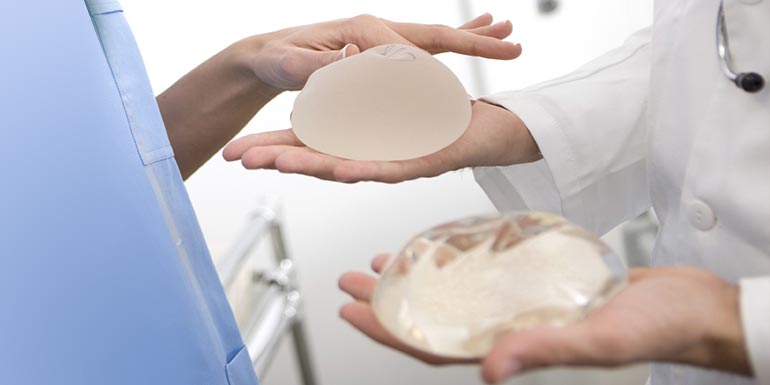
“I Felt Like I Was Dying—And No One Believed Me”: Inside the Rise of Breast Implant Illness
Miranda thought she could live with a little asymmetry in her chest. What she couldn’t tolerate were the mysterious, debilitating symptoms that came later.
“A lot of specialists told me it was all in my head,” she recalls. “No one believed what I was feeling was real.”
A few weeks after getting her implants, Miranda began experiencing days-long bouts of exhaustion and body aches. “I was launching a business and working crazy hours, so I assumed it was just stress,” she says. “It didn’t occur to me to see a doctor.”
But the symptoms only got worse. By 2017, she was bedridden several times a week. “I had crushing brain fog, I couldn’t write or concentrate, my vision was shaky, and I had to nap between every client I trained,” Miranda says. “I was so fatigued I stopped working out, gained weight, and spiraled mentally.”
Desperate for answers, she visited multiple specialists—a GP, cardiologist, endocrinologist, and even a holistic practitioner. Aside from high blood pressure, every test came back normal. Around this time, her sister sent her a social media post from a model describing how her breast implants had made her sick. “Deep down, I knew that’s what was happening to me,” Miranda says.
Her own research led her to a Facebook group called Breast Implant Illness and Healing by Nicole, created by Nicole Daruda after she had her implants removed in 2013. The surgery, called “explantation,” removes both the implants and the surrounding scar tissue. “I’d never heard of breast implant illness, and no doctor ever mentioned it,” Miranda says. “But seeing thousands of women with identical symptoms convinced me.”
She decided she wanted her implants removed immediately. “It just made sense,” she says.
The Growing Movement to “Explant”
Miranda is part of a fast-growing wave of women who believe their breast implants are harming their health and are opting for removal.
Every year, about 400,000 women get implants in the U.S.—roughly 100,000 for post-mastectomy reconstruction and 300,000 for cosmetic reasons. According to Alan Matarasso, MD, a plastic surgeon and past president of the American Society of Plastic Surgeons (ASPS), “Over 90 percent of those women are happy with their results and never experience health problems.”
Still, statistics tell a story: while breast augmentation has been the top cosmetic surgery in the U.S. since 2006, it dropped 14.9 percent from 2018 to 2019. Explant surgeries, meanwhile, rose 34.4 percent in the same year, according to The Aesthetic Society.
Despite growing awareness, breast implant illness—or BII—isn’t officially recognized by the FDA or mainstream medicine. Much of the information being shared comes from online communities. Daruda’s Facebook group now has over 120,000 members; the Instagram account @breast_implant_illness has more than 66,000 followers.
“Women have been raising concerns about their implants since the 1990s,” says Diana Zuckerman, PhD, president of the National Center for Health Research. “Social media has just amplified their voices.”
“I Checked Off Every Symptom”
Jade Root, a U.S. Army major and fitness competitor, got implants seven years ago to create a more proportional look for the stage. Over time, she developed symptoms now commonly associated with BII. “I chalked it up to motherhood and deployment stress,” she says.
But during a break from competitions, her health collapsed. “I couldn’t remember basic work terms. I’d nearly fall asleep driving to the office after a full night’s rest.” Doctors prescribed multiple medications—two for joint pain and numbness, one for sleep, and Xanax for anxiety—but nothing helped.
After she shared her struggles online, a friend who had experienced BII sent her a symptom list. “I checked off nearly every single one,” Jade says. “I started crying because it finally made sense.” She booked explant surgery three weeks later.
Stories like Jade’s are common in these groups, partly because diagnosing BII is so difficult. There’s no single test, and its symptoms—chronic fatigue, joint pain, brain fog, rashes, hair loss, blurred vision, food sensitivities—overlap with many other conditions, including autoimmune disorders.
Dr. Matarasso explains: “BII is a constellation of symptoms. We don’t fully understand why some women develop them and others don’t. Breast implants are among the most studied medical devices, and the majority of people tolerate them well. But for those who don’t, the effects can be serious.”
What the Research Shows
Though skeptics remain, new data is shifting the conversation. A 2020 study in The Annals of Plastic Surgery followed 750 women who had explant surgery between 2017 and 2018. Researchers tracked 11 of the most common BII symptoms before and after surgery. Results showed dramatic improvement in all 11 symptoms immediately post-op, and the improvements lasted long term.
Meanwhile, a rare but confirmed cancer—breast implant-associated anaplastic large cell lymphoma (BIA-ALCL)—has also raised alarms. The FDA recalled specific textured implants in 2019 after linking them to the disease. While BIA-ALCL is distinct from BII, its recognition underscores the need for stronger warnings.
Fighting for Recognition
Women with suspected BII often see multiple doctors before anyone takes them seriously. “Specialists told me I was fine, or depressed,” Miranda recalls. “I stopped going to appointments because no one would listen. I reached the point of suicidal thoughts.”
Finally, she found a surgeon willing to remove her implants in November 2018. “It sounds crazy, but my brain fog, vision issues, and pain disappeared almost instantly,” she says. “It felt like coming out of a debilitating flu.”
Chelsea Harrison, a yoga instructor and former bikini competitor, had a similar experience. She got implants at 23, partly because competitors who placed higher than her all had them. Years later, she developed rashes, fatigue, and anxiety. When she tried to book explant surgery, one surgeon told her she “didn’t want to do that from an aesthetic standpoint.”
“It can be surprisingly hard to find a surgeon who will remove implants,” says Zuckerman. “They’re worried about how patients will react to the results.”
Still, Harrison persisted. She eventually found a surgeon who specialized in explantation and no longer performs augmentations. “My inflammation went down, my energy came back, and I actually like how I look more now than I did with implants,” she says. “But it took a lot of self-acceptance to get here.”
Pushing for Transparency
In 2019, the Breast Implant Working Group—which includes Matarasso, Zuckerman, and patient advocates—proposed a black box warning and a patient checklist for implant manufacturers and doctors to give patients before surgery. The FDA released its own version later that year, but Zuckerman says the language was “much weaker.” Her group has submitted a petition with over 80,000 signatures urging the FDA to adopt stronger wording.
Until warnings improve, many women continue to turn to online communities for support. Yet explant surgery remains costly—typically $5,000 to $8,000, not including a breast lift—leaving some unable to pursue it right away. Others worry about how their bodies will look afterward, especially in industries like bodybuilding, where implants are common.
But for women like Jade Root, the choice was clear. “Ultimately, my health came first,” she says. “If I’d known the risks before, I never would have gotten implants.”
“Women Deserve to Be Taken Seriously”
Today, Miranda is back to teaching fitness classes. Her energy and mental clarity have returned. “When I was sick, I lost all will to live,” she says. “If I’d listened to the specialists and done nothing, I wouldn’t be here today.”
Whether or not BII gets formal medical recognition, one thing is clear: women are experiencing real, debilitating symptoms. “Their voices matter and they deserve to be studied,” says Dr. Matarasso. “These symptoms shouldn’t be minimized. And for patients with unexplained health issues, breast implants should be on the list of possible causes.”
What do you think about this article? Please share it and comment.
You would like to publish an article with us? Please contact us.
 General Health Magazine