
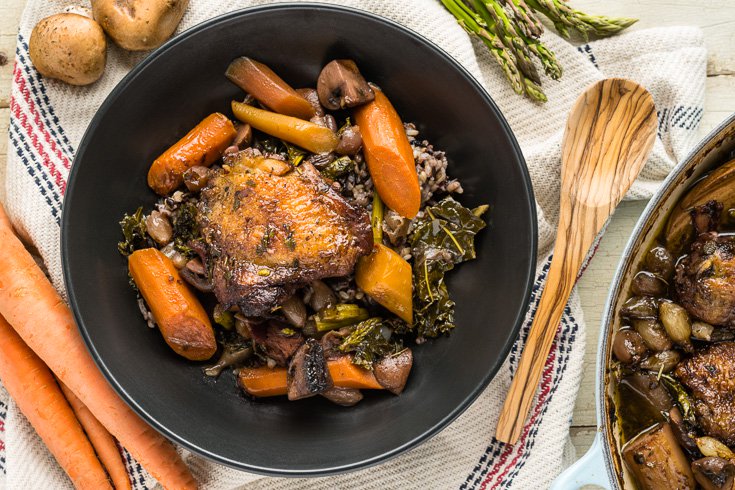
Coq au vin is one of France’s most celebrated comfort dishes, known for its tender, slow-braised chicken, rich red wine sauce, savory bacon, and aromatic herbs. Traditionally rustic yet undeniably elegant, this French classic brings together simple ingredients to create a deeply satisfying meal.
Although French cuisine can sometimes seem intimidating, coq au vin is surprisingly approachable. With a little preparation, a Dutch oven, and some time in the kitchen, you can create a restaurant-quality dish that is perfect for family dinners, entertaining guests, or enjoying a cozy evening at home.
This gluten-free version stays true to the spirit of traditional coq au vin while incorporating nutrient-rich vegetables, flavorful beef bacon, chicken bone broth, and wholesome herbs. The result is a hearty, well-balanced stew with layers of flavor and a rich, velvety sauce.
What Is Coq au Vin?
Coq au vin translates to “rooster with wine” and originates from traditional French country cooking. Historically, the dish was prepared by slowly braising tougher rooster meat in red wine until it became tender. Over time, chicken became the more common choice, making the recipe easier to prepare in modern kitchens.
Traditional coq au vin typically features chicken, bacon, mushrooms, pearl onions, and red wine. These ingredients are slowly cooked together, allowing the flavors to develop into a rich, savory sauce.
This recipe incorporates several additional ingredients to enhance both flavor and nutritional variety. Kale, asparagus, and carrots contribute color, texture, and valuable nutrients, while chicken bone broth adds depth to the cooking liquid.
Instead of conventional pork bacon, beef bacon provides a delicious alternative with a distinctive savory flavor. Grass-fed butter and arrowroot starch help create a smooth, slightly thickened sauce without relying on traditional wheat-based flour.
The combination delivers a comforting French-inspired meal that is naturally gluten-free.
What Makes This Coq au Vin Special?
There are several reasons this recipe deserves a place in your regular dinner rotation.
A flavorful red wine sauce: Red wine is the defining ingredient in coq au vin. As it simmers with the chicken broth, herbs, and vegetables, it develops a complex flavor that is both rich and aromatic.
A nutritious selection of vegetables: Carrots, kale, asparagus, mushrooms, and pearl onions contribute a variety of textures, colors, and nutrients. They also make this stew a more complete and satisfying meal.
Beef bacon for added depth: Crispy beef bacon introduces a smoky, savory element that complements the wine and herbs beautifully.
Naturally gluten-free thickening: Arrowroot starch provides an excellent alternative to conventional flour, helping thicken the sauce while maintaining a smooth consistency.
Aromatic French herbs: Sage, tarragon, garlic, and herbes de Provence create a fragrant seasoning blend that gives the dish its distinctive character.
The Ingredients and Their Roles
Each ingredient contributes something important to the overall flavor and texture of this dish.
- Chicken: Skin-on chicken breasts or legs provide the protein and form the foundation of the stew. Chicken legs are particularly well suited to braising because they remain tender and flavorful during cooking.
- Beef bacon: Adds smoky richness and savory depth to the sauce.
- Red wine: Creates the characteristic coq au vin flavor and provides the base for the braising liquid.
- Chicken bone broth: Complements the wine while adding additional savory flavor.
- Sage and tarragon: Bring earthy, aromatic, and slightly sweet herbal notes.
- Herbes de Provence: A traditional French-inspired herb blend that commonly includes thyme, savory, oregano, marjoram, and sometimes lavender.
- Garlic: Enhances the savory foundation of the stew.
- Carrots and pearl onions: Add natural sweetness and balance the richness of the sauce.
- Mushrooms: Contribute an earthy, umami flavor that works particularly well with red wine.
- Asparagus and kale: Add freshness, color, and nutritional variety.
- Grass-fed butter: Gives the sauce a silky texture and rounded flavor.
- Arrowroot starch: Thickens the sauce without adding gluten.
Coq au Vin Nutrition Benefits
Beyond its comforting flavor, this recipe combines several nutrient-dense ingredients.
Chicken provides high-quality protein, along with important nutrients such as selenium, phosphorus, zinc, and B vitamins.
Carrots are particularly rich in beta-carotene, which the body can convert into vitamin A. Kale contributes vitamin K, vitamin C, and other beneficial plant compounds, while asparagus provides folate and additional vitamins.
Mushrooms contribute B vitamins and minerals, and garlic contains naturally occurring sulfur compounds.
The herbs also bring more than aroma to the dish. Sage, tarragon, and the herbs in herbes de Provence contain naturally occurring plant compounds that contribute to their distinctive flavors.
Together, these ingredients create a substantial meal with a balance of protein, vegetables, and healthy cooking components.
Nutrition information will vary depending on the chicken cuts, bacon, wine, broth, and portion sizes used. For accurate nutritional values, calculate the recipe using the specific ingredients and quantities selected.
How to Make Gluten-Free Coq au Vin
The secret to excellent coq au vin is building flavor in stages. Browning the bacon and chicken first creates a flavorful foundation, while deglazing the pan ensures that those delicious browned bits become part of the final sauce.
Step 1: Prepare the Chicken
Preheat the oven to 350°F (175°C).
Lightly season the chicken with sea salt and set aside.
A large Dutch oven is ideal for this recipe because it allows you to brown the meat, prepare the sauce, and finish the stew in the oven using a single cooking vessel.
Step 2: Cook the Beef Bacon
Place the chopped beef bacon in the Dutch oven over medium heat.
Cook until crisp and golden, allowing the fat to render into the bottom of the pot.
Using a slotted spoon, remove the bacon and transfer it to a plate. Leave the rendered fat in the Dutch oven, as it will provide an excellent base for browning the chicken and sautéing the vegetables.
Step 3: Brown the Chicken
Increase the heat to medium-high.
Place the chicken pieces in the Dutch oven, skin side down, and cook until the skin becomes golden brown.
The goal is to develop color and flavor rather than cook the chicken completely. Once browned, reduce the heat to medium and remove the chicken from the pot.
Set aside.
Step 4: Bloom the Herbs and Garlic
Add the sage, herbes de Provence, chopped tarragon, and minced garlic to the Dutch oven.
Sauté for approximately one minute, stirring frequently.
This brief cooking process allows the herbs to release their aromatic oils, creating a fragrant foundation for the stew. Be careful not to burn the garlic.
Step 5: Add the Vegetables
Add the chopped carrots, asparagus, pearl onions, and quartered mushrooms.
Season with sea salt and black pepper.
Sauté for approximately five minutes, stirring occasionally to coat the vegetables in the flavorful cooking fat and herbs.
The vegetables will continue cooking in the wine and broth, so they do not need to become completely tender at this stage.
Step 6: Deglaze with Red Wine and Bone Broth
Pour the red wine and chicken bone broth into the Dutch oven.
Stir thoroughly, scraping the bottom of the pot with a wooden spoon to release the browned bits left behind from the bacon and chicken.
This process, known as deglazing, is essential to developing the rich, complex flavor associated with traditional coq au vin.
Cover the pot and simmer over medium-low heat for 15–20 minutes.
During this time, the wine, broth, herbs, and vegetables begin to combine into a deeply aromatic cooking liquid.
Step 7: Thicken the Sauce
Add the arrowroot starch and grass-fed butter.
Whisk until evenly distributed throughout the cooking liquid.
Arrowroot helps create a thicker, smoother sauce, while butter adds richness and a silky finish.
For the smoothest result, you can first mix the arrowroot with a small amount of cool water to form a slurry before incorporating it into the hot liquid.
Step 8: Add the Kale, Chicken, and Bacon
Stir the chopped kale into the sauce.
Return the browned chicken and reserved beef bacon to the Dutch oven, arranging the chicken pieces among the vegetables.
Make sure the chicken is partially immersed in the cooking liquid so it can absorb the flavors as it finishes cooking.
Step 9: Finish in the Oven
Cover the Dutch oven and transfer it to the preheated oven.
Cook for approximately 30 minutes, or until the chicken reaches an internal temperature of 165°F (74°C) at its thickest point.
Cooking time may vary depending on the size and cut of the chicken. Always use a food thermometer to confirm that the chicken has reached a safe internal temperature.
Once finished, remove the Dutch oven from the oven and allow the stew to rest briefly before serving.
Tips for the Best Coq au Vin
Choose a good-quality red wine. Since wine is one of the defining flavors of this recipe, select a dry red wine that you enjoy drinking. Pinot Noir is a classic choice, although other dry reds can work beautifully.
Do not rush the browning process. Properly browning the bacon and chicken creates layers of flavor that make a noticeable difference in the finished dish.
Use chicken legs for extra tenderness. Although this recipe accommodates both breasts and legs, bone-in chicken legs are particularly suitable for braising. If using chicken breasts, monitor the internal temperature carefully to avoid overcooking.
Give the vegetables time to develop flavor. Sautéing them before adding the liquid helps bring out their natural sweetness and creates a more rounded sauce.
Adjust the sauce consistency if needed. If the sauce is thinner than desired, a little additional arrowroot slurry can help thicken it. Add gradually to avoid making the sauce overly thick.
Allow the flavors to settle. Like many braised dishes, coq au vin can taste even better after resting. Leftovers can also be refrigerated and gently reheated the following day.
What to Serve with Coq au Vin
Coq au vin is substantial enough to serve as a complete meal, but a few simple accompaniments can make the dining experience even more special.
Consider serving it with:
- Creamy mashed potatoes to absorb the rich red wine sauce.
- Cauliflower mash for a lighter, vegetable-forward alternative.
- Roasted root vegetables for additional seasonal flavor.
- A crisp green salad with a simple vinaigrette to balance the richness.
- Gluten-free crusty bread for soaking up every last bit of sauce.
For an elegant dinner party, serve the stew directly from the Dutch oven or transfer it to a warm serving dish and garnish with fresh herbs.
Frequently Asked Questions
Can I make coq au vin ahead of time?
Absolutely. This dish is well suited to advance preparation. You can cook it a day ahead, refrigerate it promptly, and gently reheat it before serving. The resting time allows the flavors to develop even further.
Can I use chicken breasts instead of chicken legs?
Yes. Both cuts work in this recipe. However, chicken breasts are leaner and can dry out more quickly during braising. Check their internal temperature carefully and remove them once they reach 165°F.
Is coq au vin gluten-free?
Traditional recipes sometimes use wheat flour to thicken the sauce. This version uses arrowroot starch instead, making it suitable for a gluten-free preparation, provided all packaged ingredients, including broth and bacon, are verified gluten-free.
Does the alcohol cook out of the wine?
Some alcohol evaporates during cooking, but it is not guaranteed that all alcohol will disappear. If you need a completely alcohol-free dish, substitute additional chicken broth, understanding that the flavor will differ from traditional coq au vin.
Can I freeze coq au vin?
Yes. Allow the stew to cool, divide it into airtight freezer-safe containers, and freeze. For best quality, use within approximately three months. Thaw in the refrigerator and reheat thoroughly before serving.
A French Classic Worth Sharing
There is something special about a dish that combines rustic ingredients with elegant, developed flavors. Coq au vin does exactly that.
This gluten-free interpretation brings together tender chicken, smoky beef bacon, earthy mushrooms, sweet pearl onions, colorful vegetables, and a beautifully aromatic red wine sauce. The addition of kale, asparagus, and carrots gives the traditional French preparation a fresh twist without sacrificing its comforting character.
Although the recipe involves several preparation steps, the cooking process is straightforward. Once everything is in the Dutch oven, the oven does most of the work, leaving you free to enjoy the wonderful aromas filling your kitchen.
Whether you are preparing a special family dinner or entertaining friends, this coq au vin is a delicious way to bring a little French-inspired cooking to your table.
Bon appétit!
What do you think about this article? Please share it and comment.
You would like to ask a question, publish an article with us or place and advertisement? Please contact us.

