
Arthritis is a common condition that affects millions of people worldwide, causing pain, stiffness, swelling, and reduced mobility. While arthritis can impact individuals of all ages and backgrounds, many people seek natural and low-impact ways to manage their symptoms and improve daily comfort. Among the most effective complementary practices is yoga, a gentle form of exercise that combines movement, stretching, breathing, and relaxation.
Yoga can help individuals with arthritis improve flexibility, strengthen supporting muscles, reduce stress, and enhance overall well-being. When practiced consistently and carefully, certain yoga poses may help reduce discomfort and support healthier joint function.
How Yoga Benefits People with Arthritis
Yoga focuses on slow, controlled movements that encourage flexibility and relaxation without placing excessive stress on the joints. For individuals living with arthritis, this can provide several important benefits, including:
- Reduced joint stiffness
- Improved range of motion
- Increased muscle strength and balance
- Better posture and mobility
- Reduced stress and tension
- Enhanced mental well-being
In addition, yoga’s emphasis on breathing and mindfulness can help individuals better manage chronic pain and improve their overall quality of life.
Child’s Pose: Gentle Stretching and Relaxation
One of the most recommended yoga poses for arthritis relief is Child’s Pose. This restorative pose gently stretches the lower back, hips, and thighs while promoting relaxation throughout the body.
How to Perform Child’s Pose
- Begin on your hands and knees.
- Slowly lower your hips back toward your heels.
- Extend your arms forward or rest them alongside your body.
- Lower your forehead to the floor and breathe deeply.
- Hold the pose for several slow breaths before returning to the starting position.
This pose is especially helpful for relieving tension in the back and hips, areas that may become stiff due to arthritis.
Cat-Cow Pose: Improving Spinal Flexibility
The Cat-Cow Pose is another beneficial movement for individuals with arthritis. This gentle flowing motion improves flexibility in the spine while helping reduce stiffness and tension.
How to Perform Cat-Cow Pose
- Start on your hands and knees with your wrists aligned under your shoulders.
- Inhale as you arch your back and lift your head and tailbone upward.
- Exhale as you round your spine and tuck your chin toward your chest.
- Continue alternating between these movements slowly and smoothly.
This pose promotes mobility in the back and neck while encouraging healthy posture and gentle spinal movement.
Triangle Pose: Enhancing Balance and Flexibility
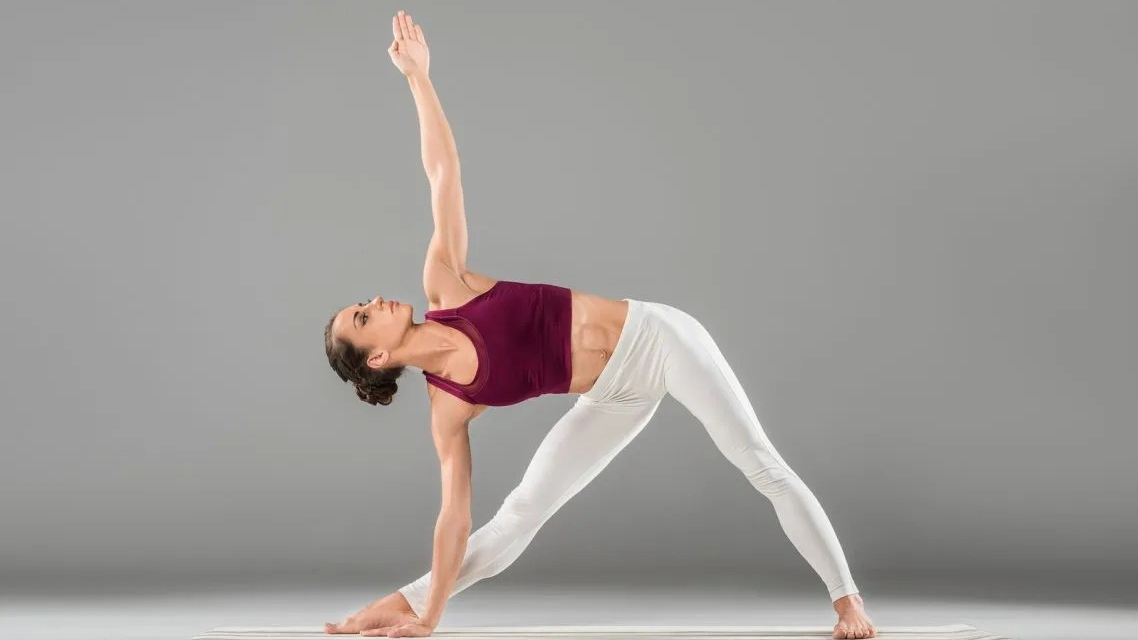
Triangle Pose is a standing posture that helps improve flexibility, balance, and strength. It stretches the hips, spine, shoulders, and legs while encouraging stability and coordination.
How to Perform Triangle Pose
- Stand with your feet wide apart.
- Turn one foot outward and slightly angle the opposite foot inward.
- Extend your arms out to the sides.
- Reach one hand toward the floor while extending the opposite arm upward.
- Hold the pose while maintaining steady breathing, then repeat on the opposite side.
This pose can help improve posture and body alignment while gently stretching multiple muscle groups.
Corpse Pose: Deep Relaxation and Stress Relief
Although simple in appearance, Corpse Pose is one of the most important yoga poses for people with arthritis. It encourages full-body relaxation and can help reduce physical tension and mental stress.
How to Perform Corpse Pose
- Lie flat on your back with your arms resting comfortably at your sides.
- Allow your feet to relax outward naturally.
- Close your eyes and focus on slow, deep breathing.
- Release tension from each part of your body.
- Remain in the pose for several minutes before slowly sitting up.
This restorative posture can help calm the nervous system and support better pain management.
Practicing Yoga Safely with Arthritis
While yoga offers many benefits, individuals with arthritis should approach the practice carefully and avoid movements that cause pain or strain. Beginners may benefit from working with a qualified yoga instructor who understands joint limitations and can recommend modifications when needed.
It is also important to:
- Move slowly and gently
- Avoid overstretching joints
- Use supportive props when necessary
- Focus on proper breathing
- Stop immediately if pain increases
Consistency is often more beneficial than intensity, and even short daily sessions can make a positive difference over time.
Conclusion
Yoga can be a valuable tool for managing arthritis symptoms and improving overall health. Gentle poses such as Child’s Pose, Cat-Cow Pose, Triangle Pose, and Corpse Pose may help reduce stiffness, improve flexibility, and promote relaxation.
By incorporating yoga into a regular wellness routine, individuals with arthritis may experience greater comfort, improved mobility, and enhanced quality of life. With patience and consistent practice, yoga can become an effective and supportive part of long-term arthritis management.
What do you think about this article? Please share it and comment.
You would like to ask a question, publish an article with us or place and advertisement? Please contact us.

